[If the video doesn’t play, click HERE to view the video from TED.com]
“Damian Palin is developing a way to use bacteria to biologically “mine” minerals from water — specifically, out of the brine left over from the desalinization process.”–from his profile on TED.com
In this short and sweet video, engineer Damian Palin invites us to “imagine a mining industry in a way that one hasn’t existed before. Imagine a mining industry that doesn’t mean defiling the Earth.” His work is based in Singapore, a country with no natural resources, where land is at a premium, and water itself is a scarce resource. No wonder they are a leader in desalination technologies (seawater reverse osmosis where seawater is forced through a membrane filter creating pure water–with brine as a waste by product).
However, the brine by-product of the desalination process is currently just being dumped back out to sea, and is detrimental to the local environment. So Palin proposes that he can use bacteria to mine minerals such as calcium, potassium, and magnesium out of the brine, basically creating a mineral mine for Singapore.
I’m intrigued by the innovation of out of the box thinkers like Palin, especially knowing that conservation and sustainability are the driving force behind his research. He says in one of the comments: “Be assured that I believe in the power and beauty of Nature and that the processes I am experimenting with are bioinspired and so should integrate harmoniously with natural processes.”
I think that his thoughts embrace the principle of “Think Global, Act Local,” and hope his research is as successful and sustainable as he imagines it could be.
“That upon which we focus our attention is what we manifest in the third dimension…
I stumbled upon this blog post over at The Struggling Writer and was so intrigued by the video that I had to share. This is an engaging keynote speech by Levar Burton that explores the idea that stories are bridges to real world experiences; that imagination is the key to the unlocking of experience.
He shares his deep love with science fiction literature, a genre that dares to ask “What if?” Science fiction literature invites us and engages us in imagining a world that we ourselves would like to see, to inhabit, to explore.
He uses his own life as an example. As a child, he read a lot of science fiction books, but it was rare for him to see people like him in those pages, any heroes of color. Of course there were exceptions, but it was not the norm, especially in the ’60s.
Gene Roddenberry’s vision of the future, then, was hugely influential to him, and became one of his greatest life changing moments. Because what Gene’s vision said was:
“by the virtue of Nichelle Nichols sitting on the bridge of the Starship Enterprise, there was going to be a place for me in that imagined future.”
(Considering his role as Lt. Geordi LaForge in Star Trek: The Next Generation, this reality manifested for him in more ways than one.)
…the stories that we tell each other inform us of who we are, why we’re here and where we’re going.”
He also goes on to say that he likes to think that there was a child back in those days who saw Captain Kirk speak into a handheld device to communicate to his team, and eventually created one of the most ubiquitously used device in our society–the cellular phone. (Now, if that same geek can please develop a teleportation device, I would truly be grateful.)
My favorite moment is around minute 2:50, where he talks about the link between that which we imagine and that which we create. He posits:
“The stories that we tell each other and have told each other throughout the history of development of civilization are integrally important, inextricably linked with how we continue to invent the world in which we live.”
“Human beings are manifesting machines. We are that child watching episodes of Star Trek, seeing those images, using our imaginations, coming up with a piece of technology that actually serves humanity going forward. Imaginations are our continuing link into ourselves in order to make contact with ourselves that we might share the beauty of ourselves through culture with the rest of the world.”
I enjoyed that our perspectives on science fiction literature align. I mentioned in a previous post, SciFridays: The Green Float Concept that science fiction literature is an ally to innovation because it asks “What if” and lends itself to “Why not?”
I feel the need to quote Einstein again, “Imagination is more important than knowledge. For knowledge is limited to all we now know and understand, while imagination embraces the entire world, and all there ever will be to know and understand.”
What are your thoughts? Have you had an encounter with the written word that resonated with you as strongly?
[I’m celebrating my blog’s Birthday Month! Hop over HERE to read the deets, and fill out the comment form to enter for a chance to win a $20 Amazon or Barnes and Noble e-gift card. Remember, any additional comments on any post this month will earn you extra entries!]
Pioneering surgeon Susan Lim performed the first liver transplant in Asia. But a moral concern with transplants (where do donor livers come from …) led her to look further, and to ask: Could we be transplanting cells, not whole organs? At the INK Conference, she talks through her new research, discovering healing cells in some surprising places.
[If for some reason the video can’t play, please visit the TED TALK HERE.]
“It made me wonder if there could be a better way. A way to circumvent death, and yet deliver the gift of life that could exponentially impact millions of patients worldwide.”
“Stem cells provide hope for a new beginning.”
Dr. Susan Lim
I admire Dr. Lim’s vision and compassion as she talks through her personal experiences as a pioneer surgeon. I am inspired by how she reacted to moral concerns, and followed her values to find better, more innovative solutions that focused on gifting life to patients.
I think my favorite part is around ten minutes in, when she mentioned that she led her team, “at the ridicule of my colleagues,” to focus on adult adipose stem cells. Though these stem cells were more restricted in their ability to give rise to a variety of other cells, I admire her courage to break from the scientific mainstream (who were only focused on embryonic stem cells at the time) to focus on the least controversial source of new cells.
And, how rewarding it is for her that she and her team discovered that adult adipose stem cells were not only a better source for transplant cells, but through the efforts of other researchers, could also be induced* to be reprogrammed back to the pluripotent state of embryonic stem cells (with their ability to give rise to a wide variety of other cells).
So, now her lab is focused on reprogramming mounds of adult fat cells into fountains of youthful cells that they may use to form other more specialized cells, which will one day be used as cell transplants.(Uhm, I’d gladly donate some. Just sayin’)
She mentioned that the pioneering efforts today could not be possible without the curiosity, courage, and commitment of those medical pioneers that have gone before. They each have their own story. Her story was her journey from organs to cells, a “journey through controversy, inspired by hope that one day we could all experience longevity with an improved quality of life.”
Dr. Lim’s journey started with a mindset shift. What are some of your thoughts on Dr. Lim’s journey? What mindset shift (great or small) have you encountered lately? Have you debated on whether to choose the ‘road less traveled’?
Please share, I’d love to hear from you!
*The researchers named these induced adult stem cells “IPS” which stands for “Induced pluripotent stem cells”
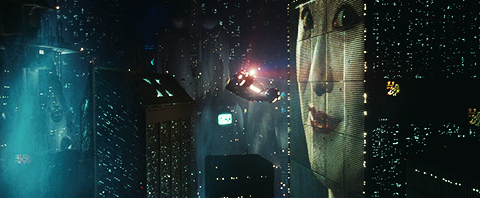
Last night, the hubs decided that he wanted to watch some classic movies, so since we are who we are, our version of a classic movie translated into watching Blade Runner,* a first time viewing for both of us.
Our verdict of the movie itself was kind of a toss up. Even though I enjoyed the atmospheric, neo-noir-ness of the movie, and of course, I loved that Los Angeles kind of reminded me of Fifth Element meets Serenity, we weren’t really fans of the ending.
That’s OK. Whatever fault we found in the ending, the movie more than made up for it with a warbly, Kenny G-like soundtrack that we were way too immature not to mock, and a random cameo of a galloping unicorn.
(That feeling of “what?” that you’re experiencing now…yeah, us too.)
Anyway…
I think the best part of the movie watching experience was seeing all the far out future-y things that 2019 will supposedly have for us and yelling at the TV every now and again:
Hey, where is my spaceship?
I want a synthetic owl!
How come I don’t have a robot servant that will ultimately malfunction and try to kill me yet??
Blade Runner is just the last movie in a line of science fiction movies** that we’ve either watched or re-watched recently that’s made us ask that question. I mean, come on, Back to The Future II?! I’ve wanted a hoverboard since rumors spread in my fifth grade class that Mattel was secretly developing the toy. So, tick-tock. 2015 is just around the corner. It’s about time you deliver.
(I would prefer my hoverboard in silver, but won’t complain if I get it in pink.)
So, how about you? Have you watched a movie recently that’s made you feel gypped about the future world that we’re supposedly living in? What techno gizmo do you want people to start inventing already??
*You were probably surprised it wasn’t Die Hard, but no need to call the Fringe division on us–we gorged on action movies last week for the hubs’s birthday. ^_^
**At least Dune has the decency to be set 30,000 years into the future, and Star Wars is set “A long time ago in a galaxy far, far away.”
Seeing real life scientists and engineers work together to create collaborative projects as the Green Float Concept (and others–see THIS ARTICLE) makes me proud to be a science fiction writer (and, proud to be a big nerd, evidently).
To me, science fiction is more than just setting, like a post apocalyptic world or a spacecraft. Don’t get me wrong, those setting are still COOL, but it’s not the main reason why I love science fiction.
When I think “science fiction,” I think of Jules Verne, Isaac Asimov, Frank Herbert…those pioneers in the genre who used their writing to create new landscapes that evolved from current political/social climes or adventure stories that explored/explained the unknowable (at least in their day).
Science fiction is an ally to innovation and progress because it explores the “what ifs?” and lends itself to the “why not?” Why not create a rocket that can break free of Earth’s gravity and land on the moon? It sounds sort of like a beta test, right? I mean, alien conspiracies aside, I wonder how motivated we would have been to explore the moon if Jules Verne had not written From the Earth to the Moon.
It all brings to mind this Einstein quote: “Imagination is more important than knowledge. For knowledge is limited to all we now know and understand, while imagination embraces the entire world, and all there ever will be to know and understand.” What an awesome gift to have, the ability to influence a whole generation with imagination and all the other possibilities (and power) inherent in creativity.


 Liza Kane